
Purpose & Functions
KAUPAPA ME NGĀ MAHI
Te Pūhana Ora’s purpose is to represent and elevate the voices of whānau / hūnau, ensuring health system decisions are informed by local priorities and lived experience.
Our statutory functions include:
- engaging with whānau / hūnau and communities
- providing advice to Health New Zealand | Te Whatu Ora
- influencing health planning and commissioning
- monitoring health system performance for our communities
Te Pūhana Ora does not deliver health services.
Ko tā Te Pūhana Ora he kawe i ngā reo o te whānau, kia whai wāhi ai ēnei whakaaro ki te whakamahere, te tuku pūtea, me te aroturuki i te pūnaha hauora.
Ehara a Te Pūhana Ora i te kaiwhakarato ratonga hauora.
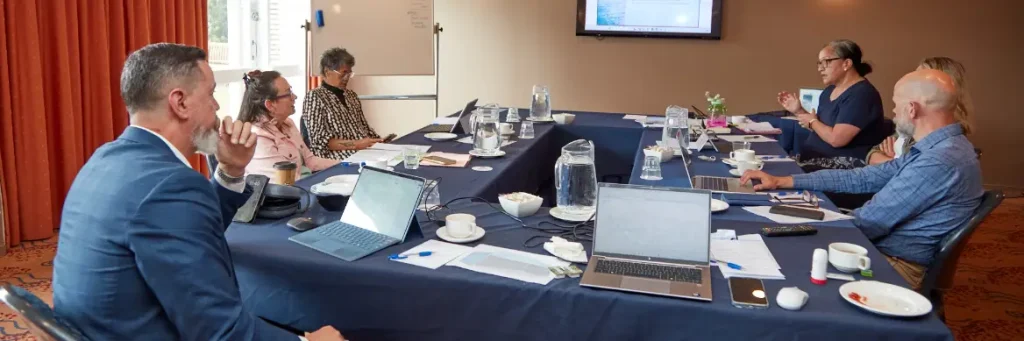
WHAT WE DO:
WE:
- Gather and amplify whānau voice
- Advocate for equitable, culturally safe, place‑based care
- Support alignment across health, housing, workforce, and community systems
- Hold the system accountable to whānau experience
OUR PURPOSE
In alignment with the Pae Ora (Healthy Futures) Act 2022, the purpose of Te Pūhana Ora IMPB is to ensure Māori voices shape the future of health care by:
A. REPRESENTING MĀORI ASPIRATIONS:
- Advocating for the hauora needs and aspirations of Māori communities.
B. MONITORING SECTOR PERFORMANCE:
- Assessing how effectively the health system responds to those needs and aspirations.
C. CO-DESIGNING LOCAL HEALTH SERVICES:
- Partnering with Te Whatu Ora (Health New Zealand) and Te Aka Whai Ora (Māori Health Authority) to design services that align with Māori perspectives and priorities.
WHAT DRIVES US
HEALTH AND WELL-BEING SERVICES
- Expanding access to health services tailored to the unique needs of our communities.
- Supporting mental health, paediatric, elderly, and maternal care.
WHĀNAU EMPOWERMENT:
- Providing advocacy, information, and resources to help whānau thrive.
- Promoting sustainable living, financial literacy, and employment pathways.
CULTURAL CONNECTION AND IDENTITY:
- Celebrating and revitalizing cultural practices.
- Supporting kaupapa Māori-based health solutions and traditional healing.
OUR FUNCTIONS
The core functions of Te Pūhana Ora IMPB, inspired by section 30 of the Pae Ora (Healthy Futures) Act, including:
‣ WHĀNAU ENGAGEMENT AND INSIGHTS
- Engaging with whānau, hapū, and iwi to understand local health needs.
- Sharing insights with Te Whatu Ora and Te Aka Whai Ora to inform service planning and delivery.
‣ EVALUATING HAUORA MĀORI
- Assessing the state of Māori health in our region.
- Identifying key priorities and recommending action plans for improvement.
‣ LOCALITY HEALTH PLANNING
- Collaborating with health sector leaders to co-create and implement locality-specific health plans.
‣ SECTOR PERFORMANCE MONITORING
- Monitoring and reporting on how the health sector meets Māori health priorities and addressing service gaps.
‣ ADVOCACY FOR KAUPAPA MĀORI INVESTMENT
- Supporting the Māori Health Authority’s role in directing investment toward kaupapa Māori services and fostering health innovation.
‣ COMMUNITY REPORTING AND ACCOUNTABILITY
- Reporting regularly to whānau, hapū, and iwi on the Māori Health Authority’s progress, activities, and investments.
‣ LEADERSHIP AND REPRESENTATION
- Nominating representatives for appointment to the Hauora Māori Advisory Committee, ensuring Māori leadership in health governance.
OUR WORK
Whānau Hauora Priorities:
Our Focus
Our priorities come directly from kōrero shared by whānau through hui, group discussions, one‑to‑one conversations, and everyday interactions.
These priorities are not programmes.
They are signals for where the system must adapt.
Priority 1:
Reliable, Equitable Access to Care That Fits Island Realities
Access to care should be real, not just theoretical.
Whānau told us that timing, eligibility rules, workforce availability, travel, and cost often determine whether care can actually be accessed. Even when services exist, they don’t always work in practice for island life.
Whānau should not have to adapt themselves to the system.
The system must adapt to place.
Priority 2:
Continuity, Trust, and Workforce Stability
Care quality should not depend on luck.
Whānau experience better care when relationships are consistent, trusted, and grounded in familiarity. Frequent workforce turnover and short‑term cover undermine trust and safety.
Stable, supported, and locally grounded workforce models are essential for equitable care.
Priority 3:
Supporting Māmā, Pēpi, and Whānau in the First 2,000 Days
The early years matter.
Whānau described pregnancy, birth, and early parenthood as both joyful and deeply stressful. Being required to leave the island weeks before birth, separation from support people, limited post‑natal mental health and lactation support, and concerns about confidentiality place an unfair burden on māmā and whānau.
Early‑life inequities create lifelong impacts. Care must be coordinated, compassionate, and designed for island realities.
Priority 4:
Supporting Māmā, Pēpi, and Whānau in the First 2,000 Days
From Crisis Response to Community Wellbeing
Mental distress, grief, and substance harm are part of everyday reality for many whānau — yet support is often episodic, crisis‑driven, or hard to access.
Whānau told us:
- Men and rangatahi lack safe spaces to grieve and talk
- Confidentiality concerns stop people seeking help
- Support often arrives too late
Whānau want culturally grounded, preventative, and locally accessible pathways that build wellbeing over time.
Priority 5:
Ageing Well and End‑of‑Life Care That Enables Whānau to Stay Home
Kuia and koroua deserve dignity, choice, and connection.
Whānau are deeply concerned about the lack of local aged care, respite, and end‑of‑life support. Being forced to leave the island to receive care is not just a service gap — it is a cultural and social loss.
Whānau want elders supported to age in place, close to whānau and whenua.
OUR COMMITMENT
Through these roles, Te Pūhana Ora IMPB will stand as a powerful advocate for Māori health equity, working collaboratively to shape a health system rooted in tikanga Māori, where whānau thrive and cultural identity is celebrated.